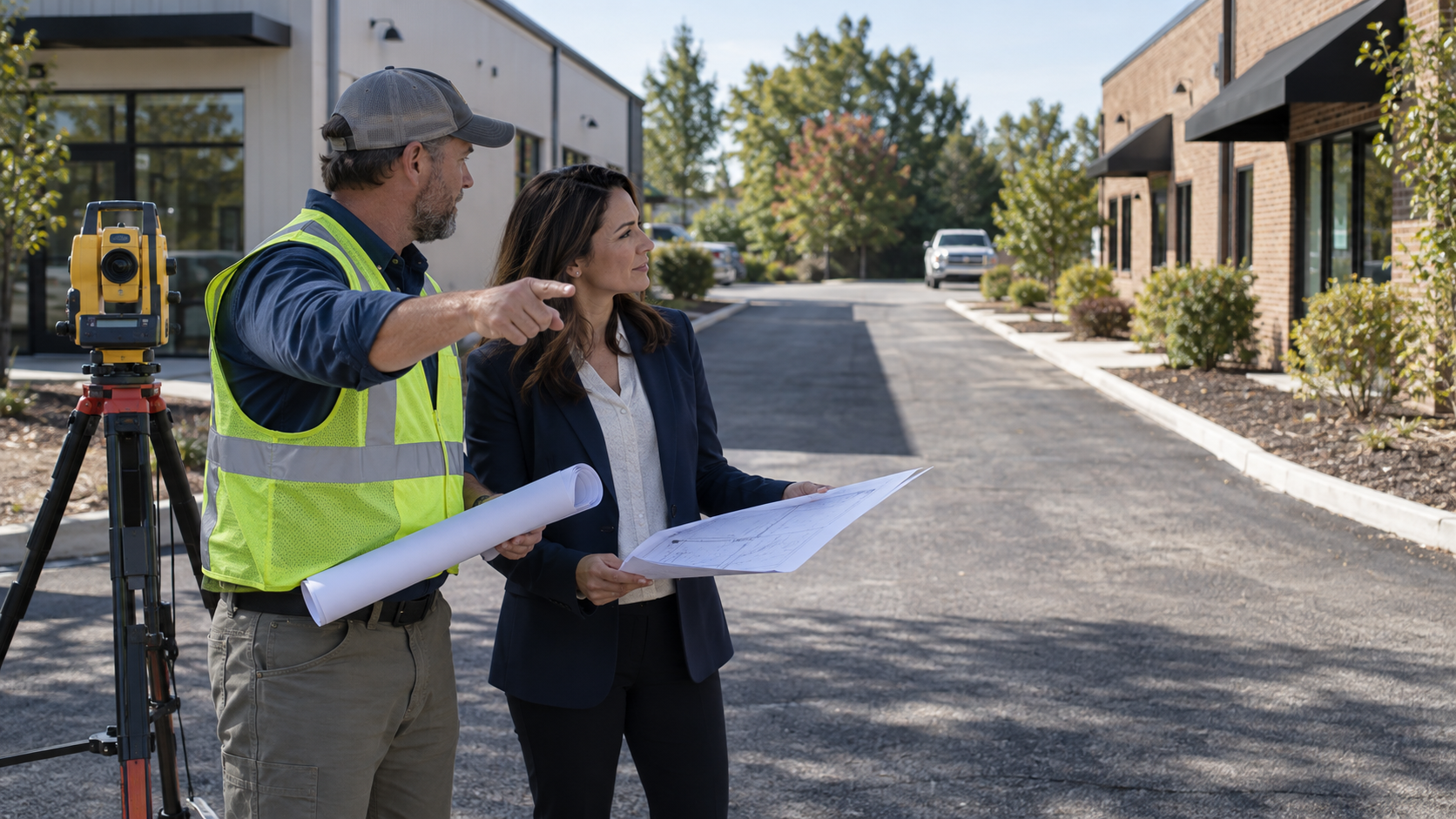
A visible driveway shows how people reach a property today. It does not, by itself, establish the legal right to use the route or whether it supports a buyer's intended operation.
A commercial buyer tours a hypothetical property through the same driveway used by the current tenant. Deliveries arrive there every day. During diligence, the buyer asks what gives the property the right to use the portion crossing neighboring land. The answer is less clear than the pavement.
Physical access is an observation. The legal basis for access is a separate question.
Identify the route the business actually needs
Ask the buyer to describe customer entry, truck access, service access, and any planned change in use. Map those needs against the available survey and recorded documents. A general statement that the property has access may not answer the particular operational question.
Collect the documents the team believes establish the relevant rights. Counsel should review their beneficiaries, scope, conditions, and relationship to the property. The surveyor can help identify the depicted route. Avoid treating longstanding use as a legal conclusion without that review.
Ask a precise coverage question
Texas has an Access Endorsement, Form T-23, in its prescribed forms. Its existence does not mean every property qualifies or that it covers every form of access a business might want. Ask the title team and underwriter what the actual proposed coverage addresses and what remains outside it. Texas access endorsement
TDI identifies lack of a right of access among potential title concerns. That makes it worth investigating early, not a reason to assume every driveway is a problem. TDI title insurance guidance
Resolve the commercial question before the deadline
If the available rights do not appear to match the intended operation, the buyer and counsel need to evaluate the implications under the contract. That may involve requesting information or discussing a proposed agreement, but no particular remedy should be assumed available.
Include the lender when its review depends on the same access question. Keep any proposed document and its approval status visible to all affected teams.
Physical access, legal access, and usable access
A driveway can make a property easy to visit while leaving important questions unanswered. Does the route stay within the property? If it crosses another tract, what document or other legal basis supports that use? Does the buyer's proposed operation require a different entrance or a type of traffic the existing arrangement does not clearly address?
These questions become more concrete when the business plan changes. In a hypothetical purchase, an office occupant uses passenger vehicles while the buyer plans frequent truck deliveries. Observing the current tenant's routine does not answer the buyer's questions about the proposed operation. Give counsel and the other reviewers that operational context before asking for an assessment.
Keep public approvals separate as well. A question about a driveway permit or road connection is not necessarily the same as a question about rights across private land. Ask the appropriate professional or authority to address each issue rather than accepting one general assurance about access.
What documents help the review?
Start with the survey, the relevant title materials, and any identified access agreement or easement. Ask for the complete instrument, including exhibits and amendments known to the team. A summary sentence in an offering memorandum should not replace the document that is supposed to establish the right.
Identify any maintenance or shared-use questions that matter to the buyer. Even where a route exists, the business may need to understand who maintains it or how a proposed change will be evaluated. Those are questions for the actual agreement and qualified advisers, not assumptions to draw from how the pavement looks.
Can title insurance replace the access review?
The proposed policy and endorsements need to be evaluated on their own terms. They should not be treated as a promise that every planned use of a driveway will work. The Texas endorsement above is a specific example, not a nationwide form requirement. Available coverage and the underlying legal questions require review in the property's jurisdiction.
For a related question, read Survey and title commitment do not match: What buyers should check.
Start with how you need the property to work.
Access matters to the business you are buying a property to run. Speak with Sterling National Title about your acquisition and the access questions your advisers have identified. See how the title and closing discussion can reflect those priorities.
Talk with Sterling about your acquisitionSchedule a 15-minute conversation. Tell us about the property, timeline, and issue you are working through.Sources and further reading
- Texas Department of Insurance: Form T-23 access endorsement
- Texas Department of Insurance: Title insurance FAQ
General educational information, not legal, tax, or coverage advice. Requirements depend on the property, jurisdiction, transaction documents, and underwriting. State-specific examples are identified in the text. All scenarios are hypothetical.