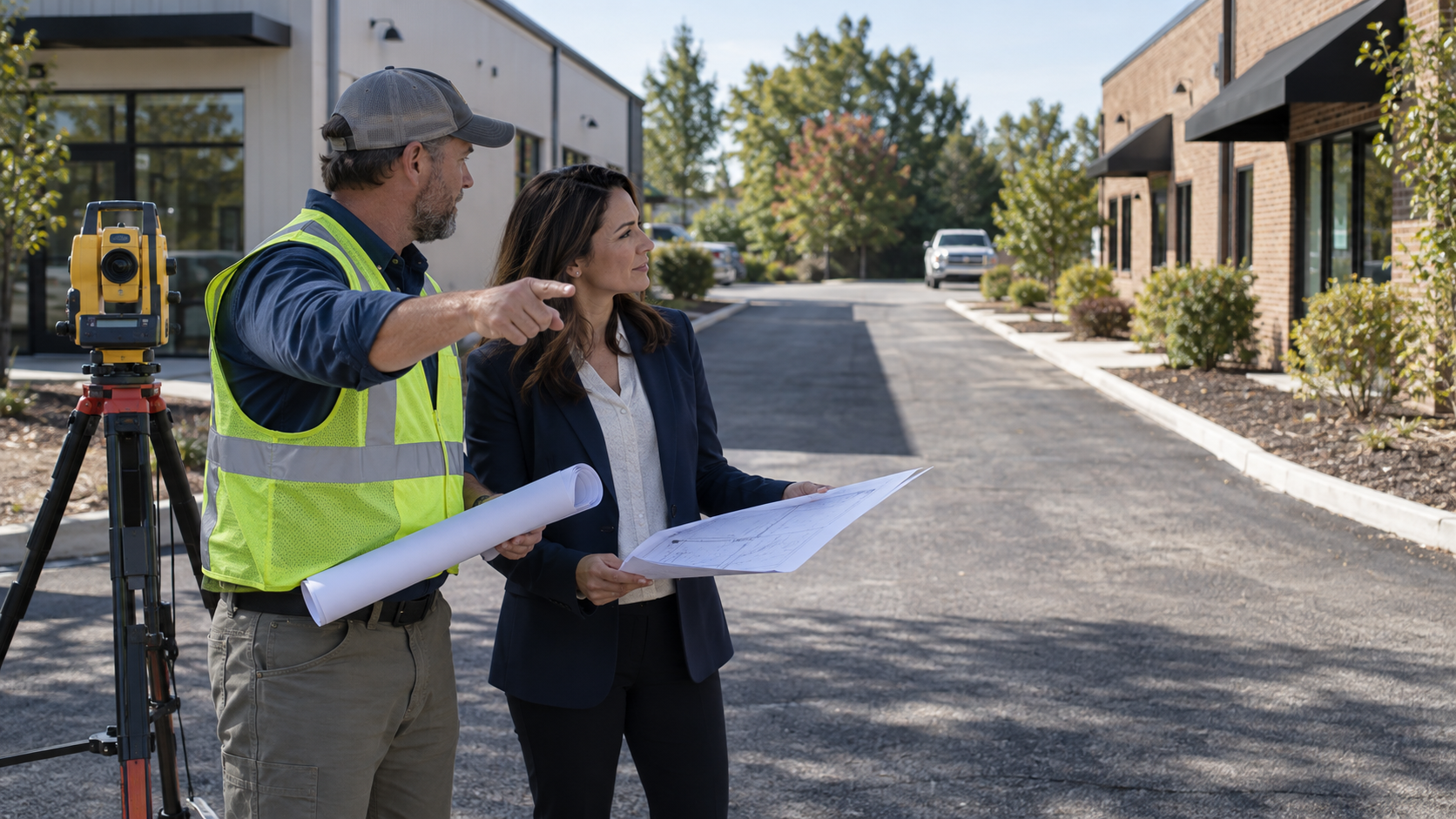

When a survey and title commitment do not match, confirm the versions and property being compared. Then separate clerical differences from substantive questions about boundaries, easements, or other matters. The discrepancy determines who needs to review it.
A hypothetical buyer reviews a commercial survey and notices an easement that does not appear where the team expected. Elsewhere, the survey references a document number that differs from the title commitment. The instinct is to ask which document is wrong. The first task is to make sure everyone is comparing the same versions and property.
Build a common reference set
Collect the current commitment, the survey with its date and revision information, the legal description, and the relevant recorded documents. Ask whether the surveyor worked from the same commitment the transaction team is now reviewing.
List each discrepancy separately. A document-reference error, a difference in acreage, and a physical encroachment are not interchangeable. Combining them into one request to fix the survey makes the response harder to evaluate.
The Texas commitment identifies the proposed insured property and lists exceptions and requirements. TDI also advises checking the policy's legal description against the survey. Neither instruction makes a street address an adequate substitute for the underlying description. TDI title commitment TDI title insurance guidance
Assign the right question to the right professional
Ask the surveyor about the depiction and survey findings. Ask the title team about the recorded instrument and its treatment in the commitment. Counsel should evaluate the transaction's legal implications and any requested remedy.
If a revision is needed, record what changed and circulate the revised version to the lender and other affected reviewers. Do not let a corrected document remain in one person's inbox while the closing package still uses an older version.
Consider the business use as well as the paperwork
The buyer should explain the intended use that makes the discrepancy important. A question affecting access, parking, or a planned improvement may need a different level of attention from a clerical reference issue. Do not assume that issuing a policy resolves every development or operating concern.
Why an updated survey may not end the discussion
Imagine the surveyor corrects a document reference, but the buyer's real concern is that a loading area appears to cross the easement shown on the drawing. The reference correction resolves one question. It does not necessarily explain the rights affecting that loading area or whether the buyer can use it as planned.
Record both questions so the clerical correction does not conceal the business issue. Ask counsel to interpret the relevant instrument and the surveyor to clarify the physical depiction. The title team can address how the matter appears in the proposed insurance. These responses complement one another; one should not be presented as a substitute for all the others.
What should you send with a survey discrepancy?
Identify the precise sheet, note, exception number, or recorded reference involved. Describe the mismatch in ordinary language. For example, explain that the commitment references one document number while the survey note uses another. Include both versions rather than a cropped screenshot that removes dates and identifying information.
If several people are annotating the survey, keep their questions separate from the surveyor's issued work. An investor's marked-up PDF can be useful for discussion, but it should not circulate as a revised professional survey. Preserve the original and identify the source of every proposed change.
For a multi-parcel site, check whether the question concerns the entire acquisition or only one tract. That distinction can matter when the lender, buyer, and development team assess the effect on the project. A broad statement that the survey is wrong is not enough to support that decision.
Does a survey issue always prevent closing?
The answer depends on the discrepancy and the transaction's requirements. A corrected reference may involve different work from a boundary or access question. Ask what remains unresolved, whose acceptance is required, and what evidence will document the result. Do not assume a buyer's willingness to proceed also establishes the lender's or underwriter's position.
For a related question, read Commercial property access: Why a driveway is not the whole answer.
Put the property questions on the table early.
If your survey and title materials raise questions, bring them into your conversation with Sterling National Title before the closing deadline. Discuss the discrepancy, your intended use, and the coordination your commercial acquisition needs.
Discuss your commercial acquisitionSchedule a 15-minute conversation. Tell us about the property, timeline, and issue you are working through.Sources and further reading
- Texas Department of Insurance: Form T-7 title commitment
- Texas Department of Insurance: Title insurance FAQ
General educational information, not legal, tax, or coverage advice. Requirements depend on the property, jurisdiction, transaction documents, and underwriting. State-specific examples are identified in the text. All scenarios are hypothetical.